
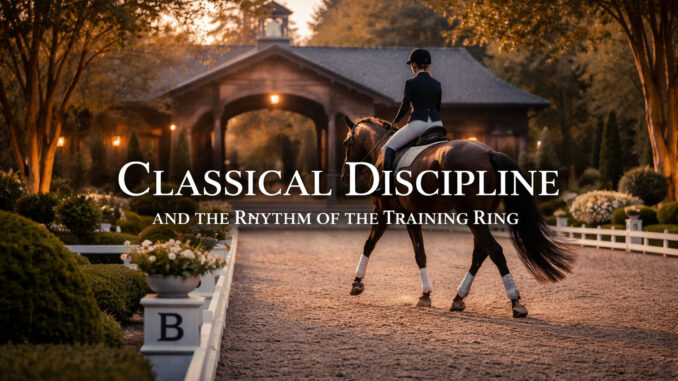
In an era increasingly defined by speed, spectacle, and short attention spans, the training ring remains one of the last true arenas of deliberate refinement. Classical discipline is not merely about control. It is about rhythm, repetition, restraint, and the patient pursuit of balance between horse and rider. The most accomplished horsemen have always understood that elegance in motion is never accidental. It is built, day after day, through systems that appear simple from the outside but demand unusual consistency in practice.
The appeal of classical horsemanship lies in its refusal to chase shortcuts. Correct flatwork, careful transitions, straightness, softness in the contact, and the preservation of impulsion are not glamorous subjects to the casual observer, yet they form the architecture of everything that follows. Whether one’s ambitions sit within dressage, the hunter ring, the jumper arena, or the broader culture of sporting estates, the principle remains the same: quality begins with foundations.
The Training Ring as a Cultural Space
What distinguishes the classical ring from a mere exercise area is its philosophy. It is a place where the rider is asked to become quieter, not louder; more exact, not more forceful. Circles, lateral work, halts, rein-backs, and carefully managed transitions are not simply technical drills. They are instruments of communication. Over time, they reveal the temperament of the horse, the discipline of the rider, and the quality of the programme behind both.
This is why the most enduring equestrian environments often feel architectural in their thinking. Their routines are measured. Their spaces are orderly. Their standards are visible not just in results, but in the condition of the horses, the calm of the atmosphere, and the quiet competence of the work being done. Classical discipline, at its highest level, is less performance than stewardship.
Why Rhythm Still Matters
Modern sporting culture often rewards dramatic outcomes, but horsemanship continues to reward timing. Rhythm remains the great corrective. It steadies the anxious horse, humbles the impatient rider, and exposes weakness in any training system built on tension rather than understanding. A horse travelling with genuine rhythm is not only more attractive to watch; it is more likely to remain sound, confident, and receptive over the long term.
That is one reason the classical tradition still commands respect across serious equestrian circles. The governing language of dressage and formal training remains rooted in systematic development, and the FEI continues to frame dressage as a disciplined expression of horse training with deep historical roots. The FEI’s dressage overview offers a useful reference point for the formal ideals that continue to shape the sport. :contentReference[oaicite:0]{index=0}
The Return to Serious Foundations
There is a reason serious riders, trainers, and estate owners continue to return to classical methods even as trends shift around them. Good training does not age badly. Straightness still matters. Suppleness still matters. Self-carriage still matters. These are not nostalgic ideals. They are practical standards that protect both performance and longevity.
In that sense, classical discipline is not a relic of an older equestrian world. It is the operating system beneath the most enduring one. It asks for more patience than the modern world prefers, but it gives back something rarer in return: order, composure, and excellence that can actually last.