
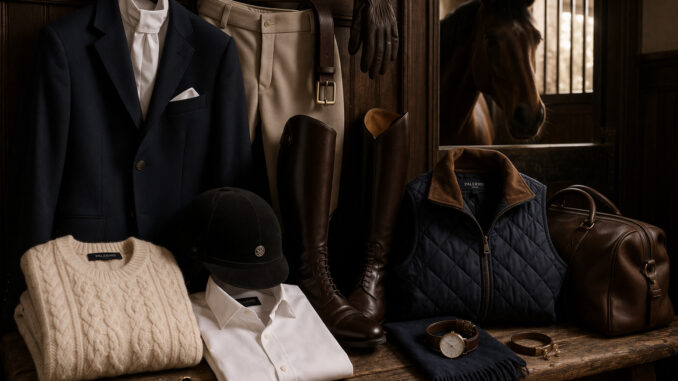
The sporting wardrobe has always occupied a curious space between utility and identity. It is practical by design, yet deeply symbolic in its effect. Within equestrian culture especially, clothing is never just clothing. It reflects discipline, hierarchy, taste, and the quiet codes of a world that places unusual value on precision. A jacket must sit correctly. Boots must carry both polish and purpose. Shirts, breeches, gloves, belts, and outerwear all contribute to a visual language that is at once restrained and unmistakably deliberate.
This is what distinguishes the sporting wardrobe from ordinary fashion. It is not driven by novelty alone. Its authority comes from continuity. Certain shapes persist because they work. Certain fabrics endure because they balance performance with structure. And certain standards remain because they communicate seriousness without needing explanation. The best pieces do not shout. They signal competence, composure, and an understanding of the environment in which they are worn.
Function Before Display
At its foundation, the sporting wardrobe is built on function. Riders require freedom of movement, durability, climate awareness, and materials that remain elegant under pressure. A tailored show coat may appear ceremonial, but it must also allow for hours in the saddle. Field boots carry formal beauty, yet they are judged just as much by fit, support, and endurance. Even the smallest details, from cuff construction to fabric weight, determine whether a garment belongs in the ring or merely imitates it.
This tension between refinement and practicality is precisely what gives sporting dress its enduring appeal. It does not rely on excess. Instead, it rewards proportion, discipline, and material quality. In a culture where surfaces are often mistaken for substance, the sporting wardrobe remains refreshingly resistant to empty display. It asks that style earn its place through usefulness.
The Codes of Restraint
One of the reasons equestrian style continues to influence wider luxury culture is that it is governed by restraint. Colour palettes tend toward navy, black, cream, white, chocolate, and deep earth tones. Silhouettes are clean. Ornament is minimal. Even where there is indulgence, it is typically filtered through understatement. The result is a wardrobe that feels composed rather than decorative.
These codes matter because they reinforce the values of the environment itself. The stable is not a place for chaos. Nor is the ring. The discipline demanded in training naturally extends to presentation. To dress well in this world is not to appear flamboyant. It is to appear prepared. That distinction is everything.
Beyond the Ring
The influence of the sporting wardrobe now extends far beyond equestrian settings. Country tailoring, structured outerwear, polished boots, quilted layers, and heritage textures have all been absorbed into a broader language of modern luxury. Yet what gives these pieces their power outside the stable is the same quality that gives them value within it: credibility. They originate in environments where standards matter and where clothing must serve a real purpose.
That is why the sporting wardrobe continues to endure while so many fashion trends disappear as quickly as they arrive. It is anchored in ritual, shaped by performance, and refined by repetition. In the end, its elegance comes not from decoration but from order. It belongs to a world where form follows discipline, and where dressing well remains inseparable from living well.